
Tottenham Trophies
Tottenham trophies are often used to judge the club’s status, but the story behind each title is what truly defines Spurs. As a hub for local fans, Tottenham Hotspur Vietnam looks beyond the numbers to explain how every cup shaped the club’s identity. From early league triumphs to European glory nights, each era left a different mark. This overview connects history with the current project under Ange Postecoglou.
Historic rise of Tottenham trophies in English football
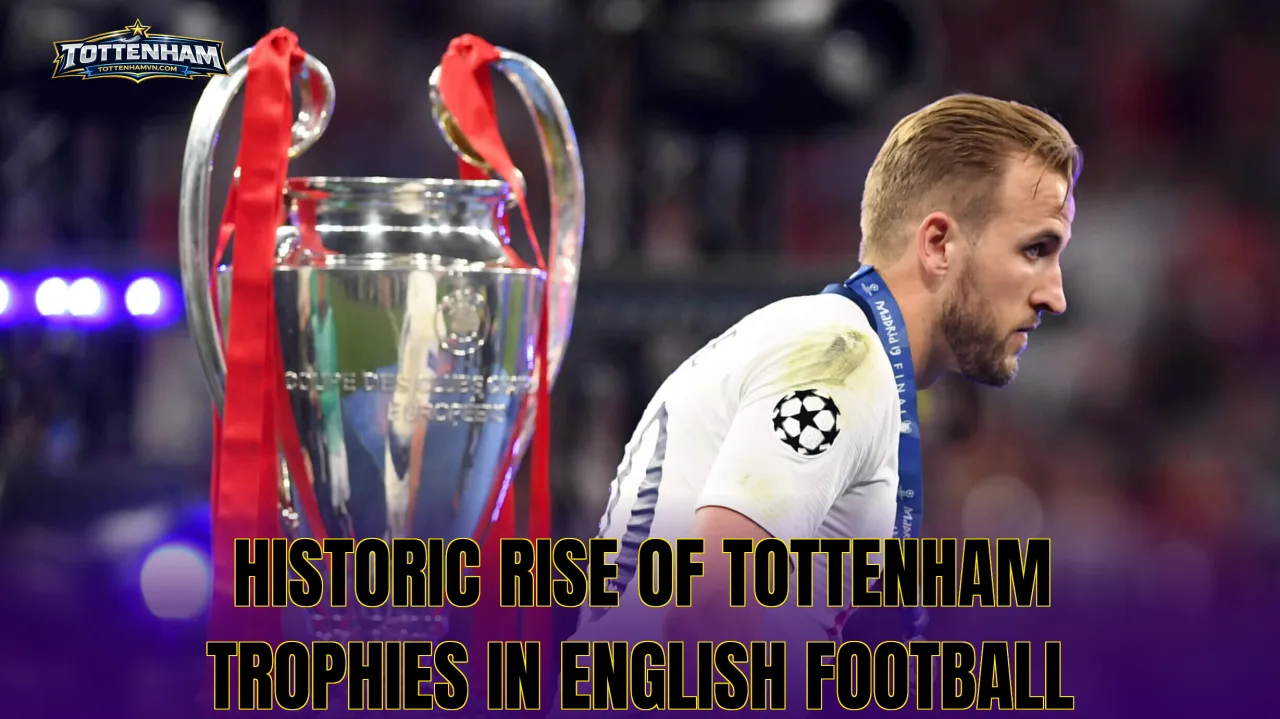
The early part of the 20th century laid the foundations for the first major Tottenham trophies. Spurs built a reputation as a cup specialist long before the Premier League era. Understanding those roots helps explain why supporters still value domestic cups so highly. This section focuses on league titles, FA Cups and the shift into a consistent top-flight force.
League titles and the famous 1960–61 double
Spurs have won the English top-flight title twice, in 1950–51 and 1960–61, with the latter season producing the iconic double. That campaign delivered one of the most important Tottenham trophies as Bill Nicholson’s side combined attacking flair with relentless pressing. They became the first club of the 20th century to win the league and FA Cup in the same season. The achievement still underpins the club’s “glory, glory” identity.
FA Cup dominance and the “cup specialists” label
The FA Cup has provided some of the most cherished Tottenham trophies for several generations of fans. Spurs have lifted the FA Cup eight times, with a golden run between 1961 and 1991. Memorable wins in 1967, 1981 and 1982 showcased a distinctive attacking style on the biggest domestic stage. The 1991 triumph, inspired by Paul Gascoigne and Gary Lineker, remains the club’s last FA Cup to date.
League Cup success and modern Wembley memories
The League Cup has also contributed key Tottenham trophies in the modern era. Spurs have claimed this competition four times, in 1971, 1973, 1999 and 2008. The 1999 victory under George Graham ended a long wait for silverware. The 2008 win over Chelsea, with Jonathan Woodgate’s extra-time header, became a defining modern Wembley moment. That success is still the club’s last major domestic trophy.
European Tottenham trophies and continental breakthroughs
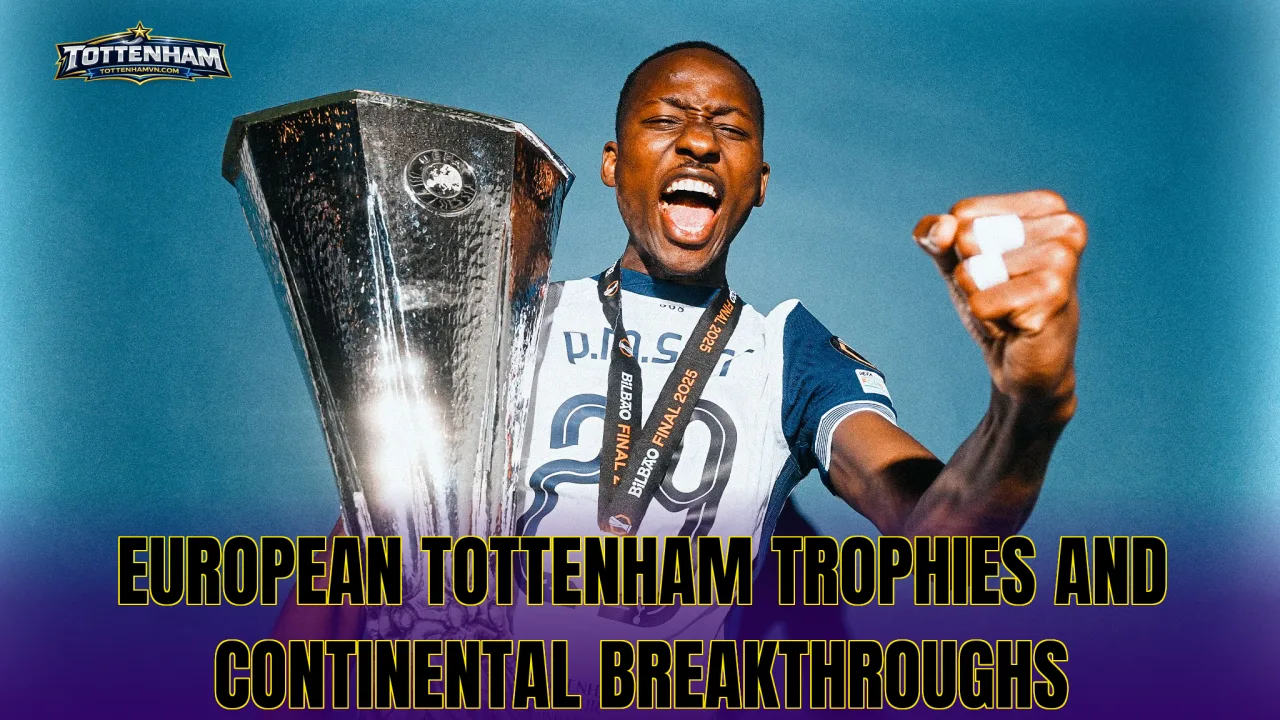
European nights at White Hart Lane and beyond added a new dimension to Tottenham trophies. Spurs were early pioneers in UEFA competitions, setting standards for English clubs abroad. These triumphs strengthened the club’s reputation for technical football and bold attacking play. The following section outlines the key European titles and deep runs that shaped continental prestige.
Cup Winners’ Cup triumph and early continental success
Spurs claimed one of their most historic Tottenham trophies by winning the European Cup Winners’ Cup in 1962–63. They defeated Atlético Madrid 5–1 in Rotterdam, becoming the first British club to win a major European trophy. Jimmy Greaves and Cliff Jones were central to that success. The victory signalled that English teams could compete with continental giants on technical terms.
UEFA Cup victories and the glory of the 1970s–80s
The UEFA Cup delivered two more major Tottenham trophies, in 1971–72 and 1983–84. Spurs beat Wolverhampton Wanderers in the first final, then overcame Anderlecht on penalties in 1984. The second-leg comeback at White Hart Lane remains one of the stadium’s greatest nights. These titles cemented Spurs as a genuine European force during a competitive era for English clubs.
Champions League runs and the 2019 final
Although the Champions League has not yet added to the list of Tottenham trophies, it has redefined the club’s modern profile. Under Mauricio Pochettino, Spurs reached the 2019 final after dramatic comebacks against Manchester City and Ajax. The run showcased elite-level consistency and tactical flexibility. It also boosted global interest, including rapid growth in the Tottenham Hotspur Vietnam community.
Statistical overview of Tottenham trophies by competition
A clear statistical view helps fans track the evolution of major Tottenham trophies across eras. While the total count has not changed since 2008, the distribution between domestic and European titles is unique. The table below summarises the main honours up to the 2025–26 season. Data focuses on recognised major competitions only.
| Competition | Number of titles | Most recent win |
|---|---|---|
| First Division / Premier League | 2 | 1960–61 |
| FA Cup | 8 | 1990–91 |
| League Cup | 4 | 2007–08 |
| European Cup Winners’ Cup | 1 | 1962–63 |
| UEFA Cup / Europa League | 2 | 1983–84 |
Comparing eras and setting realistic benchmarks
When analysing Tottenham trophies, it is important to compare eras fairly. The financial dominance of state-backed clubs has raised the bar for modern success. However, consistent top-four finishes and deep cup runs still represent progress. Fans and analysts now use metrics like expected goals and wage spend to judge performance in context.
How silverware shapes global fan culture
Major Tottenham trophies have a direct impact on supporter culture worldwide. Title wins and cup runs often trigger spikes in shirt sales, social media engagement and supporter club memberships. Communities like Tottenham Hotspur Vietnam grow fastest around big European nights and finals. These moments create shared stories that sustain passion between trophy wins.
The role of youth development in future honours
Academy graduates will likely influence the next wave of Tottenham trophies. The club continues to invest heavily in youth facilities and data-led scouting. Players like Harry Kane and Oliver Skipp prove that homegrown talent can become core leaders. Combining academy products with smart recruitment is central to Spurs’ long-term strategy.
The Postecoglou era and the next generation of Tottenham trophies
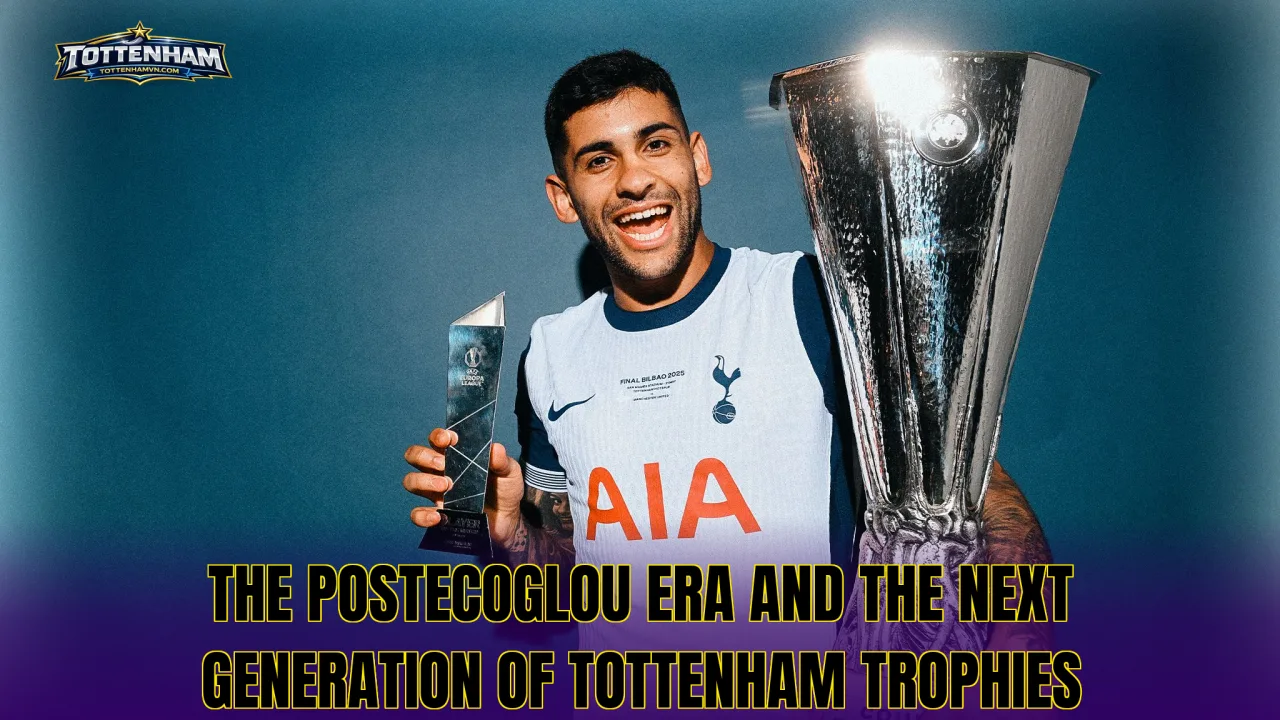
Under Ange Postecoglou, fans hope a new cycle of Tottenham trophies will emerge from an attacking, possession-based philosophy. The Australian coach has reshaped the squad with younger, more dynamic profiles. His high defensive line and aggressive pressing demand fitness and bravery on the ball. This direction aligns with the club’s historical preference for front-foot football.
Tactical identity and long-term project planning
Postecoglou’s system could be the platform for future Tottenham trophies if the club maintains patience. The focus on automatisms, rotations and quick vertical passing requires time to perfect. Recruitment has shifted towards versatile, technically secure players who can adapt under pressure. This long-term approach resonates strongly with analysts and fans at Tottenham Hotspur Vietnam.
Key players driving the current project forward
The push for new Tottenham trophies now relies on a core group blending experience and youth. Leaders like Son Heung-min and Cristian Romero provide quality in key moments. Emerging talents, including Destiny Udogie and Pape Matar Sarr, add energy and ball-carrying ability. Their development will be crucial in high-stakes knockout matches.
Financial stability, stadium revenue and competitiveness
The club’s financial model also underpins the chase for future Tottenham trophies. The Tottenham Hotspur Stadium generates elite matchday and event revenue, improving wage and transfer flexibility. Careful budgeting aims to keep the club competitive without risking long-term stability. This balance is closely followed by the analytical fanbase of Tottenham Hotspur Vietnam.
Conclusion
The history of Tottenham trophies shows a club defined by attacking football, bold European adventures and emotional cup runs. While the silverware count has stalled since 2008, structural progress and a clear playing philosophy suggest a platform for future success. For Vietnamese supporters, Tottenham Hotspur Vietnam will continue to track every step of that journey. New titles would not only enrich the honours list, but also deepen the global community built around Spurs.
Tottenham manager updates, news and analysis