
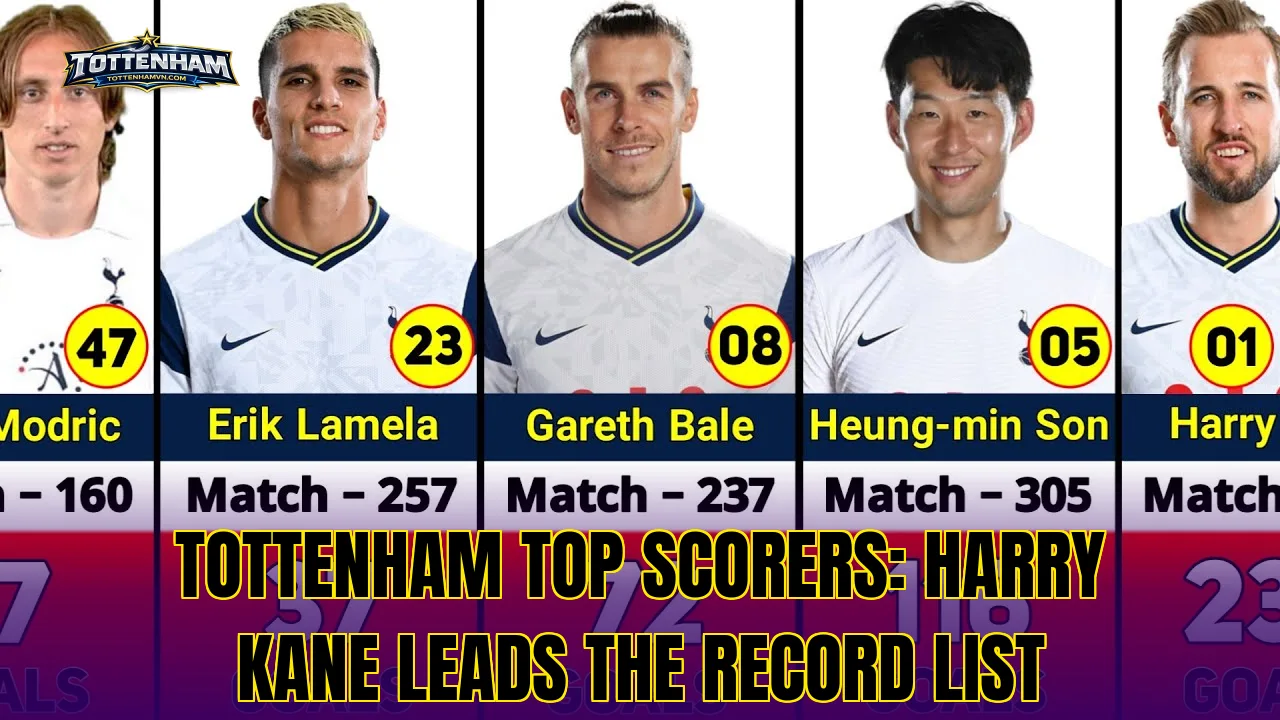
Tottenham Top Scorers: Harry Kane Leads the Record List
Tottenham top scorers charts are more than statistics; they are a living record of eras, managers, and tactical revolutions at the club. Over more than a century, different generations of forwards have defined what it means to play attacking football at Tottenham. This guide walks through the key names, numbers, and modern trends shaping the scoring legacy in N17. It is the perfect starting point for any fan who wants to understand how goals built the identity of Tottenham.
All-time Tottenham top scorers and club legends
The story of Tottenham top scorers begins with the legendary marksmen who set historic benchmarks for every new striker. From post-war poachers to modern pressing forwards, each era produced a different kind of hero in front of goal. Understanding who leads the all-time charts helps explain how the club’s attacking DNA evolved and why certain players still define debates among supporters.
Harry Kane and the modern scoring benchmark
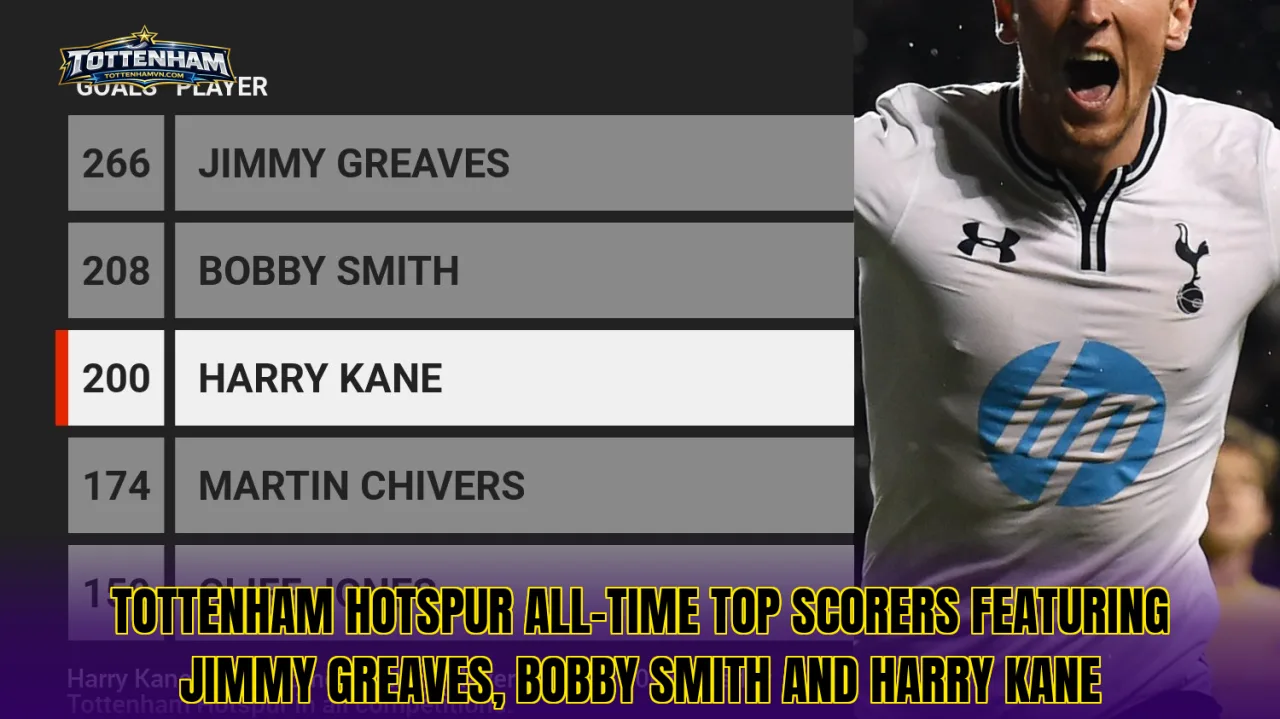
Harry Kane stands at the summit of the Tottenham top scorers list after surpassing Jimmy Greaves in 2023. The England captain left with 280+ goals in all competitions, combining elite finishing, creativity, and pressing intelligence. His numbers came in a period of intense Premier League competition and European campaigns, highlighting his consistency. For many fans, Kane set the modern standard that future forwards must chase.
Jimmy Greaves and the golden age of finishing
Before Kane, Jimmy Greaves was the name synonymous with Tottenham top scorers conversations. Greaves scored 266 goals for the club, many in an era when pitches were heavier and protection for forwards was minimal. His movement in the box and instinctive one-touch finishes made him the deadliest striker of the 1960s. Greaves remains a reference point whenever a new clinical finisher arrives at the club.
Other historic icons in the scoring charts
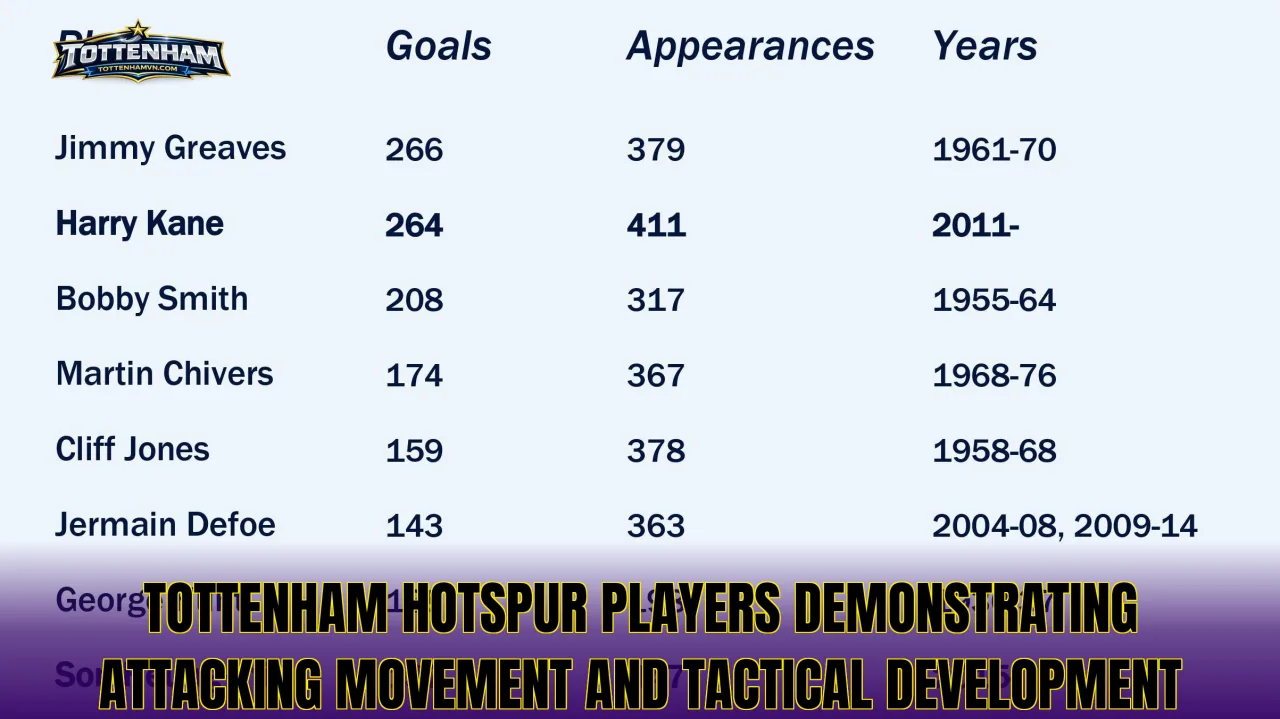
Behind Kane and Greaves, figures like Martin Chivers, Cliff Jones, and Glenn Hoddle also shaped the Tottenham top scorers narrative. Chivers provided power and aerial dominance in European nights, while Jones terrorised full-backs with pace from the wing. Hoddle contributed from deeper positions, proving that playmakers could also post elite scoring numbers. Their combined influence keeps the club’s attacking tradition rich and multi-dimensional.
| Player | Era | Official goals | Primary position |
|---|---|---|---|
| Harry Kane | 2011–2023 | 280+ | Centre forward |
| Jimmy Greaves | 1961–1970 | 266 | Centre forward |
| Martin Chivers | 1968–1976 | 174 | Striker |
| Cliff Jones | 1958–1968 | 159 | Winger |
| Glenn Hoddle | 1975–1987 | 110 | Attacking midfielder |
Seasonal Tottenham top scorers in the Premier League era
While all-time lists honour longevity, seasonal Tottenham top scorers tables reveal tactical shifts and managerial trends. Different coaches have relied on single talismans or spread goals across the front line. Looking at the Premier League era helps explain how the club adapted from traditional 4-4-2 systems to fluid attacking structures with wide forwards and advanced midfielders.
From Sheringham to Defoe: early Premier League leaders
In the 1990s, Teddy Sheringham and Jürgen Klinsmann dominated early Tottenham top scorers discussions. Sheringham blended link-up play with ruthless finishing, while Klinsmann’s 1994–95 season added elite movement and world-class reputation. The baton later passed to Robbie Keane and Jermain Defoe, whose combined tally across multiple seasons kept Spurs competitive. Their contrasting styles gave managers tactical flexibility in a rapidly evolving league.
The Kane era and Champions League ambitions
During Mauricio Pochettino’s tenure, Kane regularly topped internal scoring charts and often the league’s rankings as well. His presence at the top of the Tottenham top scorers list each season underpinned Champions League qualifications and the 2019 final run. He delivered 20+ league goals in multiple campaigns despite tactical tweaks and partner changes. That consistency allowed the club to plan around a reliable central focal point.
Post-Kane adaptation and shared responsibility
After Kane’s departure, the club faced a reset in how Tottenham top scorers would be defined each year. Under new management, Spurs shifted toward a more collective attacking model, with wide forwards and attacking midfielders sharing the load. This approach reduces dependence on a single striker and can be more resilient across long seasons. It also opens opportunities for emerging talents to break into the scoring charts.
Tactical evolution behind Tottenham top scorers
The identity of Tottenham top scorers has always been shaped by tactical evolution, from classic target men to modern pressing forwards. Formations, pressing intensity, and build-up patterns all influence where the goals come from. Analysing these shifts shows why some positions have become more productive and how managers have maximised their best finishers.
From classic number 9s to fluid front threes
Historically, most Tottenham top scorers were traditional number 9s who stayed central and attacked crosses. Modern systems, however, often use a fluid front three where wide forwards cut inside to shoot. This change increases goal output from the flanks and reduces predictability in the final third. It also means creative players can finish as well as supply chances.
Set pieces, data, and marginal gains
Recent seasons have seen a stronger focus on set-piece efficiency and data-driven analysis to boost Tottenham top scorers numbers. Specialist coaches design routines that target specific defensive weaknesses, increasing expected goals from dead-ball situations. Analytics also help identify high-value shooting zones and optimal passing patterns. These marginal gains can turn a 15-goal forward into a 20-goal one across all competitions.
Youth development and future scoring leaders
The academy pathway is increasingly important in shaping future Tottenham top scorers. Young forwards and attacking midfielders are trained in pressing systems, positionally flexible roles, and modern finishing techniques. When they step into the first team, they already understand the tactical demands of elite football. This long-term planning aims to produce homegrown players capable of leading the scoring charts.
Conclusion
The history of Tottenham top scorers is a timeline of how the club has chased attacking excellence, from Greaves and Chivers to Kane and the current generation. Each era’s leading marksmen reflect the tactics, coaching philosophies, and competitive context of their time. As new players emerge, they will be measured against these historic benchmarks and the expectations of a fanbase that demands front-foot football. For more insights, news, and in-depth analysis, visit Tottenham and stay connected with the latest from N17.