
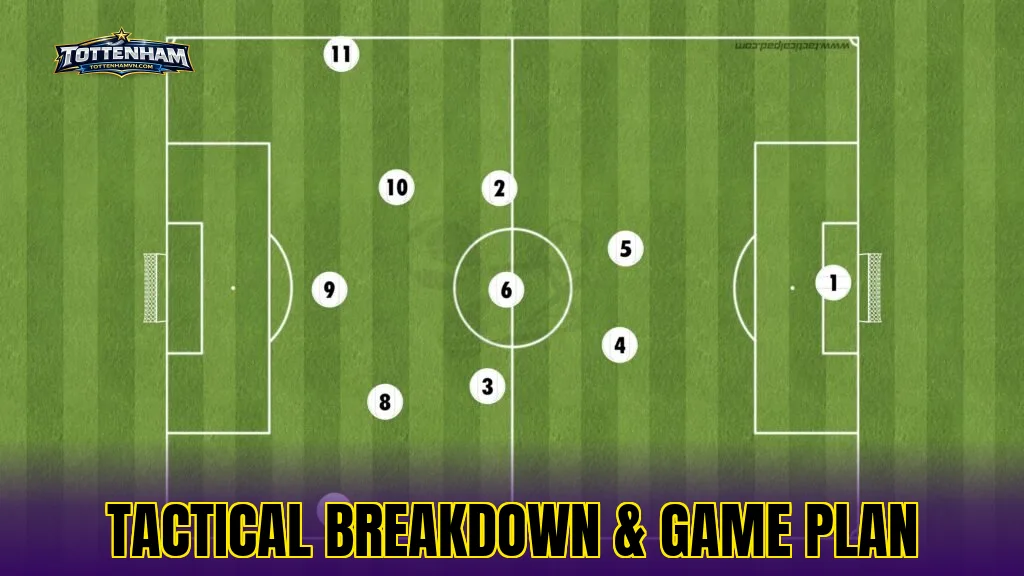
TACTICAL BREAKDOWN & GAME PLAN
Tottenham current tactical formation breakdown is the phrase every analyst is using to describe how Ange Postecoglou has reshaped Spurs into one of the Premier League’s most proactive sides, and this has become a key talking point for fans of tottenham hotspur vietnam. Under the Australian coach, Spurs have moved away from reactive football to a brave, possession‑dominant style. Understanding this shift requires looking not only at the starting shape on paper, but also at how the team morphs in and out of possession. This guide unpacks those tactical details for serious observers.
Tottenham current tactical formation breakdown in possession
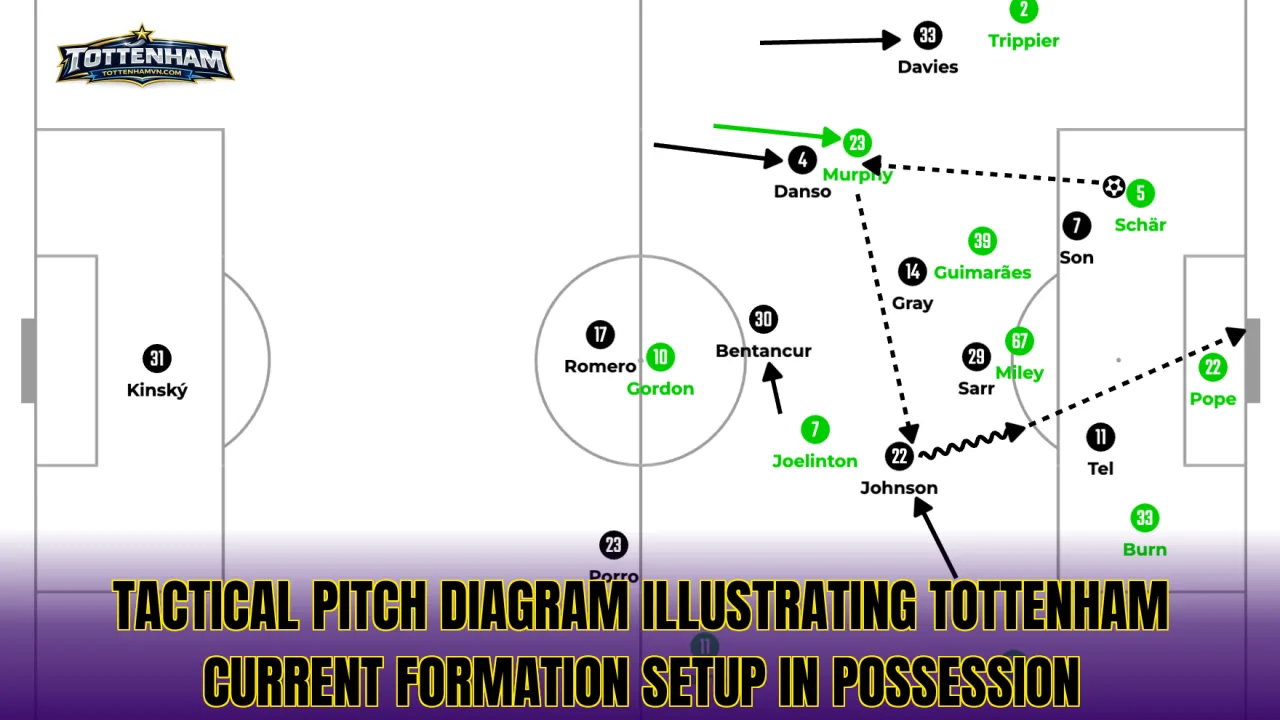
To understand the tottenham current tactical formation breakdown when Spurs have the ball, you need to look beyond the nominal 4‑3‑3. In practice, Postecoglou’s side often builds play in a 2‑3‑5 or 3‑2‑5 structure, with full‑backs stepping into midfield and wingers stretching the last line. For supporters of tottenham hotspur vietnam, this attacking setup is central to why the team looks so fluid. The goal is to overload the central channels while keeping width, forcing opponents to constantly choose between defending the half‑spaces or protecting the flanks.
Inverted full‑backs and central overloads
A key feature of the tottenham current tactical formation breakdown is the use of inverted full‑backs. Instead of hugging the touchline, the full‑backs step inside to form a midfield trio alongside the holding midfielder. This creates a 2‑3 base in build‑up, giving Spurs numerical superiority against most pressing schemes. It also allows the advanced number eight to push higher, almost as a second striker at times, while still maintaining control of central zones.
Front five structure and width management
Another important layer of the tottenham current tactical formation breakdown is how the front five are staggered. The wingers pin the opposition full‑backs wide, the centre‑forward occupies both centre‑backs, and the two advanced midfielders attack the half‑spaces. This 5‑lane occupation stretches defensive blocks horizontally and vertically. As a result, Spurs can create passing lanes into the box, cut‑backs from the byline, and late runs from midfield that are extremely hard to track for compact low blocks.
Role of the holding midfielder in circulation
Within the tottenham current tactical formation breakdown, the holding midfielder acts as the metronome. Positioned between the inverted full‑backs, this player constantly offers a safe outlet, switching play from side to side. When pressed, he drops between the centre‑backs to form a temporary back three, ensuring clean progression. His decision‑making under pressure determines whether Spurs can sustain attacks or are forced into rushed long balls, which is why recruitment for this role has been so specific.
tottenham current tactical formation breakdown out of possession
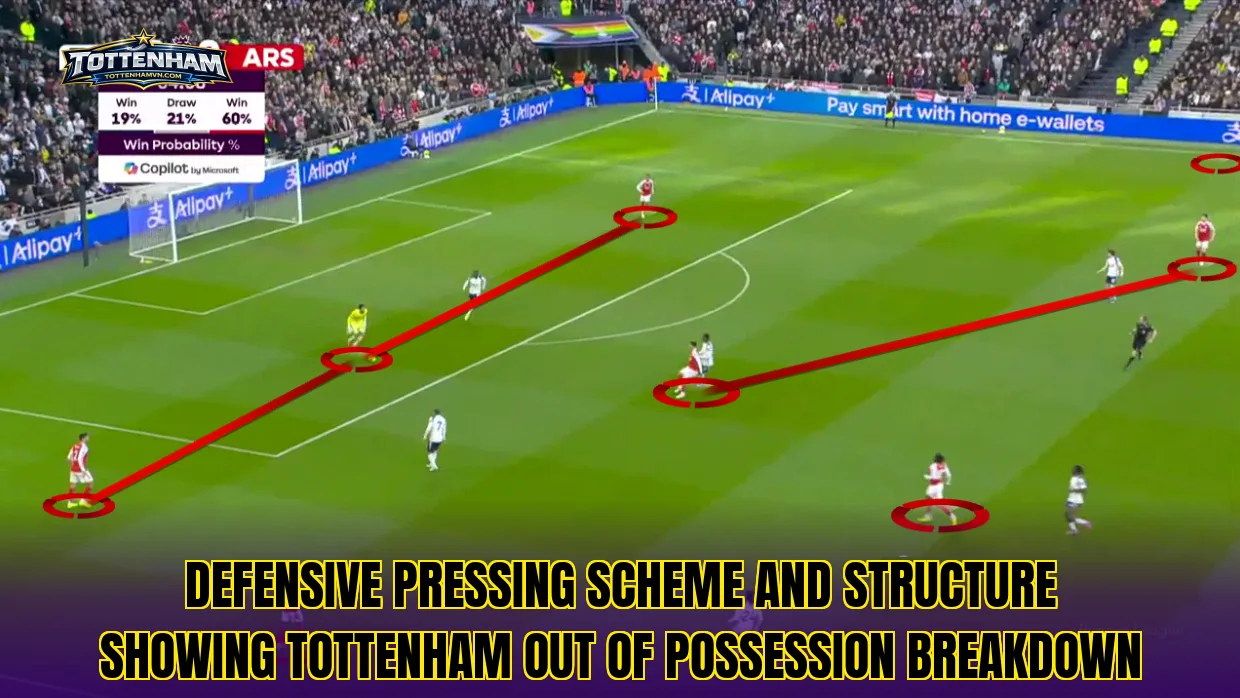
The tottenham current tactical formation breakdown without the ball is just as aggressive as in possession. Spurs defend high, aiming to compress space near the opponent’s box and win the ball back within seconds of losing it. For tactical followers in the tottenham hotspur vietnam community, the pressing structure is often compared to elite European sides that prioritise counter‑pressing. This approach demands enormous physical output but allows Spurs to control territory and limit opposition build‑up.
High press and trigger mechanisms
Central to the tottenham current tactical formation breakdown is a coordinated high press triggered by specific cues. A backward pass to a centre‑back, a slow lateral switch, or a poor first touch will prompt the front three to jump. The wingers curve their runs to block passing lanes to full‑backs, while the striker presses the ball carrier. Behind them, the midfield three squeeze up aggressively, ready to intercept vertical passes into the pivot or attacking midfielders.
Mid‑block and rest defence structure
When the initial press is beaten, the tottenham current tactical formation breakdown shifts into a compact 4‑3‑3 or 4‑1‑4‑1 mid‑block. The wingers tuck in closer to the central midfielders, leaving the flanks slightly open but protecting the half‑spaces. This “rest defence” is designed so that if Spurs lose the ball during their own attack, there are always at least two defenders plus the holding midfielder in position to delay counters. It balances risk with enough security to keep committing numbers forward.
Defensive transitions and counter‑pressing
Another hallmark of the tottenham current tactical formation breakdown is the intensity of the counter‑press immediately after losing possession. Instead of dropping back, nearby players swarm the ball carrier, trying to win it back within three seconds. The idea is to turn defensive transitions into fresh attacking opportunities, catching opponents disorganised. This also allows Spurs to sustain pressure, pinning teams deep for long spells and creating multiple chances from repeated regains in advanced areas.
tottenham current tactical formation breakdown by player roles
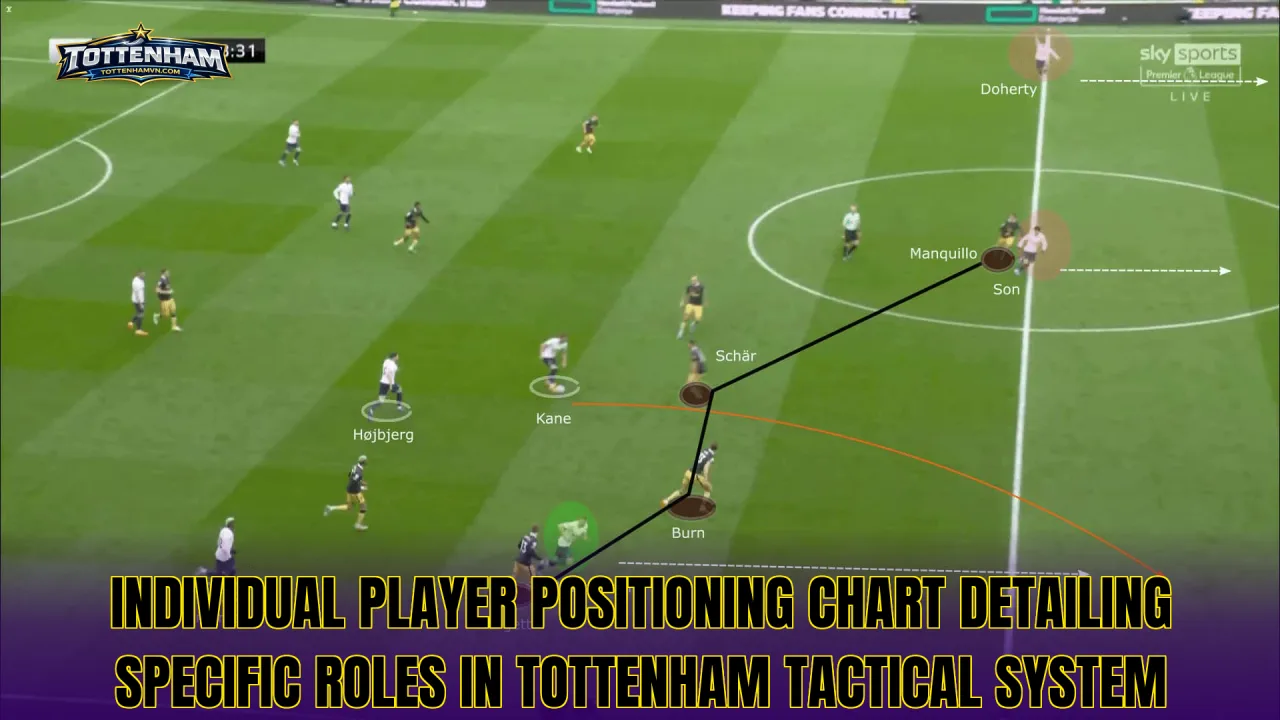
To fully appreciate the tottenham current tactical formation breakdown, it helps to map responsibilities by position. Each line of the team has clearly defined tasks that interlock like a tactical puzzle. Fans of tottenham hotspur vietnam often analyse individual performances through the lens of these role expectations rather than just raw statistics. The table below summarises how different positions contribute to build‑up, chance creation, and defensive stability.
| Position | Main Tactical Tasks | Key Attributes Required |
|---|---|---|
| Goalkeeper | Initiate build‑up, act as sweeper behind high line | Passing range, composure, 1v1 shot‑stopping |
| Centre‑backs | Progress ball, defend large spaces, win aerial duels | Pace, anticipation, line‑breaking passing |
| Full‑backs | Invert into midfield, support press, cover wide areas | Stamina, tactical intelligence, close control |
| Holding midfielder | Screen defence, dictate tempo, switch play | Positioning, vision, press resistance |
| Advanced midfielders | Attack half‑spaces, press high, arrive in box | Timing of runs, work rate, creativity |
| Wingers | Stretch play, attack 1v1, lead counter‑press | Acceleration, dribbling, defensive discipline |
| Striker | Link play, press centre‑backs, finish chances | Movement, hold‑up play, clinical finishing |
Back line responsibilities and build‑up
Within the tottenham current tactical formation breakdown, centre‑backs are more than pure defenders. They are tasked with breaking lines through incisive passing into midfield and occasionally stepping forward to commit an opposing forward. Full‑backs, meanwhile, must read when to invert and when to provide orthodox width. Misjudging these moments can leave the high defensive line exposed, which is why Postecoglou places such emphasis on recruiting defenders comfortable on the ball.
Midfield triangle and positional rotations
The midfield triangle is the heartbeat of the tottenham current tactical formation breakdown. The holding midfielder anchors transitions, while the two advanced eights constantly rotate with wingers and full‑backs. At times an eight will drop to help build from deep, allowing a full‑back to push into the half‑space. These rotations are rehearsed so that passing lanes remain open even under intense pressure, and they create confusion for man‑oriented marking schemes.
Front three dynamics and pressing lanes
The front three are the first line of both attack and defence in the tottenham current tactical formation breakdown. In possession, they maintain width and depth, with diagonal runs designed to open central corridors. Out of possession, their pressing angles are carefully coached so that they “shadow cover” passing options while closing down the ball. This dual responsibility means the wide forwards must combine winger instincts with the work rate of midfielders, a demanding hybrid role.
tottenham current tactical formation breakdown: strengths and weaknesses
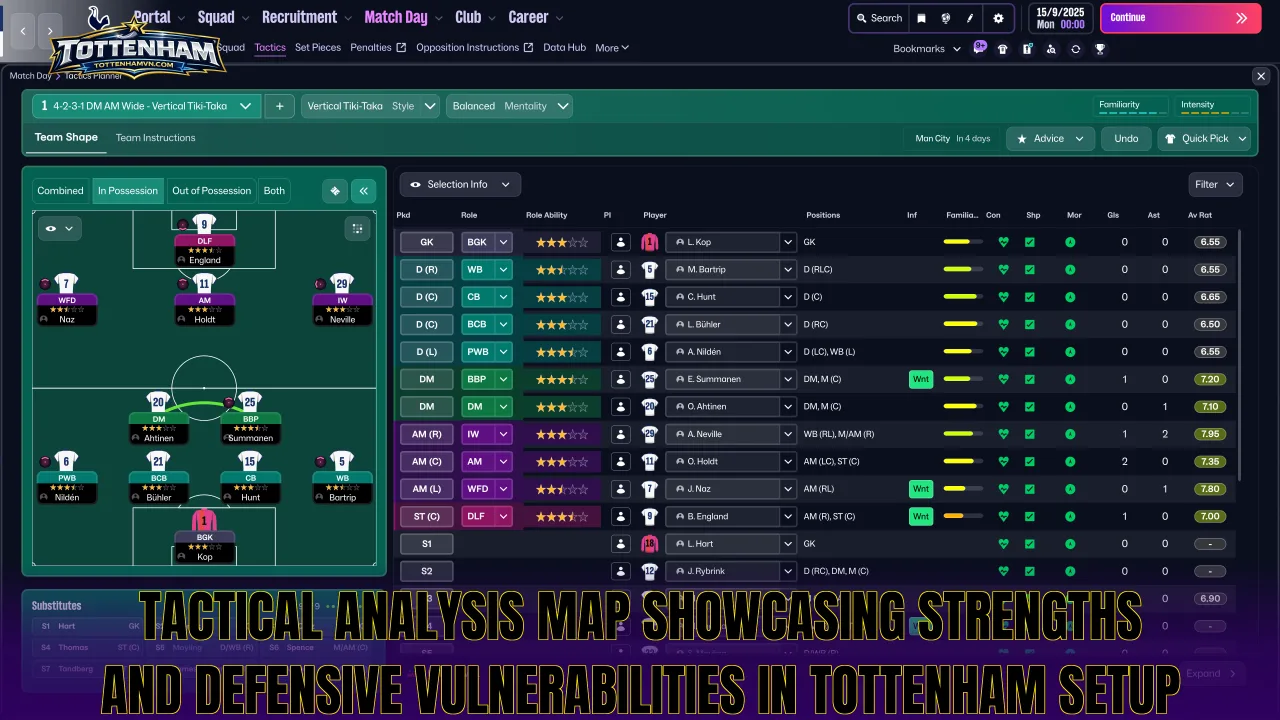
Any honest tottenham current tactical formation breakdown must acknowledge both the impressive strengths and the inherent risks of this philosophy. The system has produced thrilling attacking football that resonates strongly with tottenham hotspur vietnam supporters who favour front‑foot styles. Yet the same principles that generate high‑quality chances can also leave the back line vulnerable if execution or fitness levels drop. Analysing these trade‑offs helps explain performance swings across a long season.
Attacking benefits and chance creation
On the positive side, the tottenham current tactical formation breakdown consistently yields high expected goals through volume and quality of opportunities. The five‑lane attacking structure makes it difficult for opponents to cover every threat, leading to free runners at the far post and cut‑backs to the edge of the box. Because Spurs commit so many players forward, they also generate second‑ball situations that keep pressure on the opposition area, often resulting in quick repeat shots.
Defensive vulnerabilities and high line risks
The flip side of the tottenham current tactical formation breakdown is the exposure of the high defensive line. When the press is even slightly mistimed, direct balls in behind can leave centre‑backs racing towards their own goal. Matches against fast counter‑attacking sides have highlighted this weakness, especially when the holding midfielder is bypassed. Managing these moments relies heavily on the goalkeeper’s sweeping ability and the recovery pace of the back four, which can be tested late in games.
Adaptability against different opponents
An evolving aspect of the tottenham current tactical formation breakdown is how Postecoglou tweaks details while maintaining core principles. Against deeper blocks, full‑backs may stay wider to deliver more crosses, while versus elite pressing teams, the build‑up might become more direct. For the tactical community around tottenham hotspur vietnam, tracking these micro‑adjustments match by match has become a rich area of analysis, showing that the system is flexible rather than dogmatic.
tottenham current tactical formation breakdown and data insights
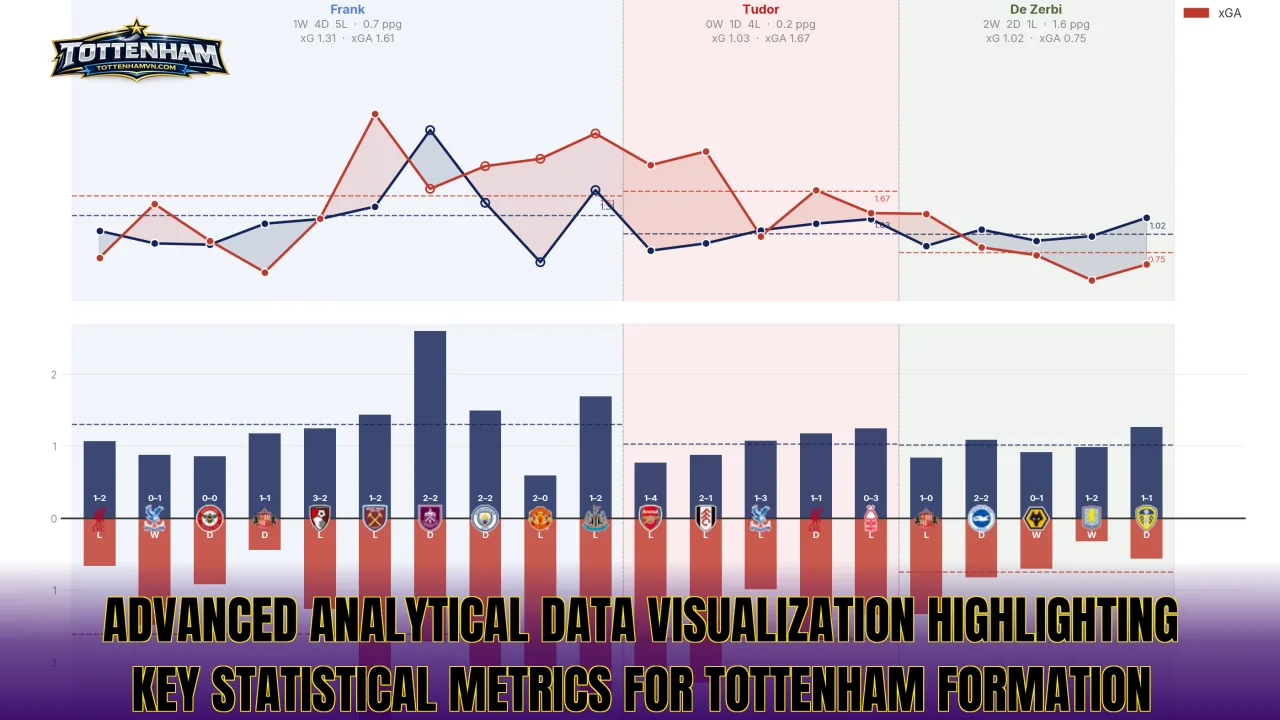
Modern analysis of the tottenham current tactical formation breakdown is incomplete without looking at underlying numbers. Metrics such as expected goals, field tilt, and pressing intensity (PPDA) all help quantify how effectively the ideas are working. For data‑savvy fans of tottenham hotspur vietnam, these statistics offer evidence that the style is not just aesthetically pleasing but also competitive at the highest level. They also reveal areas where further refinement is needed.
Possession, field tilt and territory control
From a territorial perspective, the tottenham current tactical formation breakdown is designed to keep the ball in the opponent’s half for long periods. High possession percentages are less important than “field tilt” – the share of final‑third touches compared to the opponent. Spurs often dominate this metric, reflecting how their structure pins teams back. This sustained territorial control reduces the volume of chances conceded, even if the ones allowed can be dangerous when the press is broken.
Pressing metrics and intensity levels
Pressing numbers provide another window into the tottenham current tactical formation breakdown. A low PPDA (passes per defensive action) indicates that Spurs attempt to disrupt build‑up early and often. High volumes of final‑third recoveries and turnovers within seconds of losing the ball show that the counter‑press is functioning. However, these same metrics can dip during congested fixture periods, suggesting that squad depth and rotation are crucial to sustaining the model across all competitions.
Set‑pieces within the tactical framework
Even set‑pieces are integrated into the broader tottenham current tactical formation breakdown. Attacking corners often mirror open‑play principles, with players occupying all five channels around the box to attack second balls. Defensively, Spurs use a hybrid marking scheme that mixes zonal responsibility with tight marking on key aerial threats. Quick short‑corner routines also fit the philosophy of keeping the ball on the ground and manipulating defensive shapes rather than relying solely on high deliveries.
Conclusion
The tottenham current tactical formation breakdown under Ange Postecoglou reveals a bold, coherent philosophy built around proactive possession, aggressive pressing, and structured positional play. By inverting full‑backs, overloading central zones, and maintaining a constant front five, Spurs seek to dominate territory and create sustained waves of attacks. At the same time, the high line and commitment of numbers forward introduce calculated risks that demand precision, fitness, and intelligent recruitment in every transfer window.
For supporters and analysts connected with tottenham hotspur vietnam, understanding this framework adds depth to every match‑day performance. Individual errors or standout displays can be re‑evaluated through the lens of role execution within the system, rather than isolated moments. As data and video analysis continue to refine how the team interprets these principles, the overarching structure is likely to remain, with only subtle adaptations for different opponents and competitions. In this sense, the current blueprint is both a tactical identity and a long‑term project shaping the club’s future direction.
See also: A compelling breakdown of Tottenham’s current tactical formation for newcomers – Tottenham trophies