
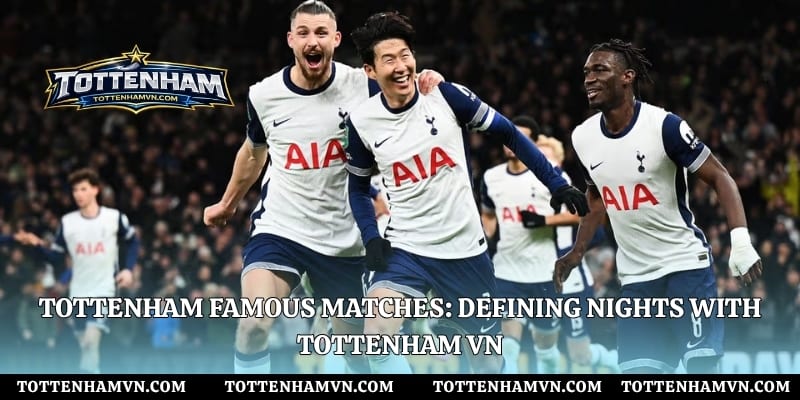
Tottenham Famous Matches: Defining Nights With Tottenham Vn
Tottenham famous matches are remembered not only for scorelines, but for the stakes, turning points and consequences that gave each game lasting meaning. Tottenham VN traces landmark fixtures across domestic and European competition, then shows how to judge their historical weight through context, tactics, decisive players and long-term legacy.
Why Tottenham famous matches became club landmarks
Tottenham famous matches include European triumphs, dramatic finals and extraordinary comebacks that changed the club’s competitive story. The Atlético Madrid, Anderlecht and Ajax games each represent a different type of landmark.
Atlético Madrid 1963 European final
The 1963 European Cup Winners’ Cup final is central to Tottenham famous matches because Tottenham defeated Atlético Madrid 5–1 in Rotterdam on 15 May. Bill Nicholson’s side became the first British club to win a major European trophy.
Jimmy Greaves and Terry Dyson each scored twice, while John White supplied the other goal. The match combined a decisive scoreline with a major historical consequence: Tottenham converted their domestic FA Cup qualification into continental success. Unlike later UEFA Cup finals, this competition was settled through one final at a neutral venue rather than a home-and-away series.
Anderlecht 1984 UEFA Cup final drama
The 1984 UEFA Cup final stands among Tottenham famous matches because the contest with Anderlecht required two legs, extra time and eventually penalties. Both matches finished 1–1, leaving the teams level at 2–2 on aggregate after the second leg at White Hart Lane.
The decisive stages can be summarized through four moments:
- Paul Miller scored for Tottenham in the first leg.
- Graham Roberts equalised late in the return match.
- The second leg remained level after extra time.
- Tony Parks made the decisive shootout save as Tottenham won 4–3 on penalties.
Ajax 2019 Champions League comeback
Ajax away in 2019 belongs to Tottenham famous matches because Tottenham transformed a seemingly lost Champions League semi-final into their first appearance in the competition’s final. They had lost the first leg 1–0 and trailed 2–0 at half-time in Amsterdam, leaving them three goals behind on aggregate.
Lucas Moura then scored three second-half goals, completing his hat-trick in added time. Tottenham won 3–2 on the night and finished level at 3–3 on aggregate, progressing under the away-goals rule then in force. The match therefore combined an individual hat-trick, a second-half comeback and a historic qualification.
How landmark Tottenham matches can be evaluated
The significance of Tottenham famous matches comes from more than memorable scorelines. Competition stage, tactical developments and individual contributions explain why particular fixtures became defining parts of Tottenham’s history.

Competitive stakes behind historic results
Competitive stakes distinguish Tottenham famous matches from entertaining fixtures with fewer long-term consequences. The Atlético Madrid match directly decided a European trophy, while both legs against Anderlecht formed the UEFA Cup final. Ajax represented a different situation: it was a semi-final, but progression placed Tottenham in their first European Cup or Champions League final.
| Match | Competition stage | Immediate consequence |
| Atlético Madrid 1963 | Cup Winners’ Cup final | European trophy |
| Anderlecht 1984 | UEFA Cup final | European trophy |
| Ajax 2019 | Champions League semi-final | First UCL final |
The surrounding competition therefore determines the historical weight of each result.
Tactical shifts that transformed decisive games
Tactical changes often explain how Tottenham famous matches changed direction during play. The Ajax semi-final provides a clear modern example. Tottenham entered half-time 2–0 down on the night before Fernando Llorente became an important focal point for more direct attacking play, while Lucas Moura exploited spaces around the forward line.
Lucas scored in the 55th and 59th minutes, rapidly changing the match from apparent elimination into an open contest. Ajax continued to create opportunities, but Tottenham maintained pressure until the final phase. Lucas eventually finished a move involving Llorente and Dele Alli in added time, completing the comeback.
Players whose moments altered match history
Individual actions are closely connected with Tottenham famous matches, although their importance depends on the surrounding team performance. In 1963, Greaves and Dyson both scored twice against Atlético Madrid, while White also contributed to the 5–1 final score.
In 1984, Roberts supplied the late equaliser that kept Tottenham in the UEFA Cup final before goalkeeper Parks became decisive during the shootout. Ajax produced another type of individual landmark: Lucas scored all three Tottenham goals in the second half. His final strike arrived in added time and completed the hat-trick that sent the club into the Champions League final.
How to revisit famous matches with context
Revisiting Tottenham famous matches involves connecting scores and memorable moments with the competition format of each period. Match records, contemporary reports and wider season context together provide a clearer historical account.

Verify scores, dates and competition stages
Basic match information establishes where Tottenham famous matches belong in the club’s chronology. Atlético Madrid was defeated 5–1 on 15 May 1963 in the Cup Winners’ Cup final in Rotterdam. The Anderlecht UEFA Cup final consisted of 1–1 draws on 9 and 23 May 1984 before Tottenham won the shootout.
Ajax 2–3 Tottenham took place on 8 May 2019 as the second leg of a Champions League semi-final. UEFA records the overall score as 3–3, with Tottenham progressing on away goals. These details distinguish a final victory, a two-legged final and a semi-final comeback.
Compare full matches, reports and key moments
Different sources reveal different dimensions of Tottenham famous matches. A scorecard establishes goals, timing and competition details, while a full match shows how possession, pressure, substitutions and tactical changes developed before the decisive moments.
A useful comparison can include:
- Official match records for scores and line-ups.
- Contemporary reports for match sequence and atmosphere.
- Full-match footage for tactical development.
- Highlights for goals, saves and other decisive incidents.
For Ajax, for example, the score alone cannot show how the tie shifted after half-time. UEFA’s account records Lucas scoring twice within minutes before completing his hat-trick with the added-time winner.
Place each match within Tottenham’s wider history
The wider timeline explains why Tottenham famous matches remain connected despite occurring decades apart. The 1963 victory followed the Double-winning era and made Tottenham the first British club to secure a European trophy. The 1984 Anderlecht final delivered another UEFA Cup, extending the club’s record of continental success.
Ajax in 2019 represented a different milestone. Rather than securing a trophy that evening, the comeback took Tottenham into their first European Cup or Champions League final. Viewed together, these fixtures represent three distinct historical themes: continental breakthrough, trophy-winning resilience and a modern knockout comeback.
>>> Read More: Tottenham European Finals: A Historical Guide | Tottenham VN
Lời kết
Tottenham famous matches reveal how individual fixtures can shape trophies, European runs, club identity and supporter memory across generations. Tottenham VN brings those games into context by connecting the scoreline with the stakes, tactical shifts, decisive moments and consequences, giving readers a clearer framework for revisiting club history.